Welcome to The Translator, where we decode Persian cuisine for the modern table. In this edition, we explore the golden crust that has captivated Persian diners for centuries: tahdig.
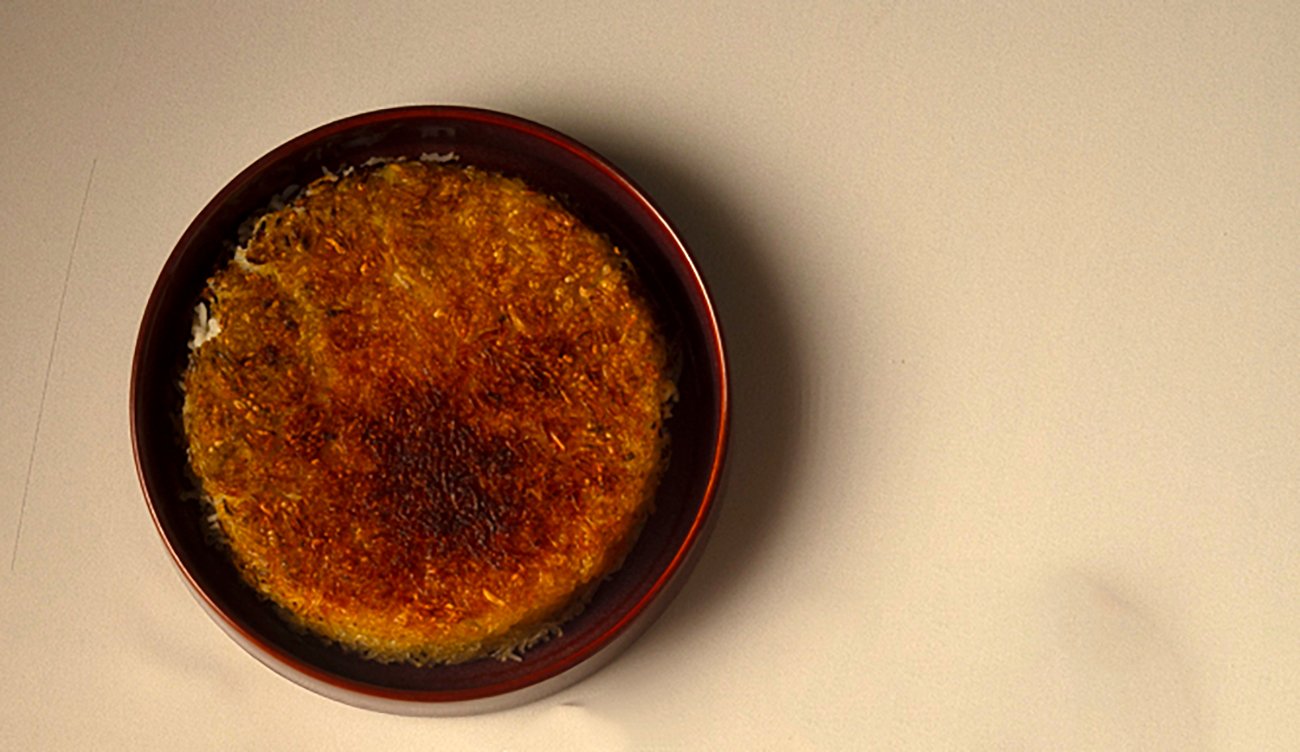
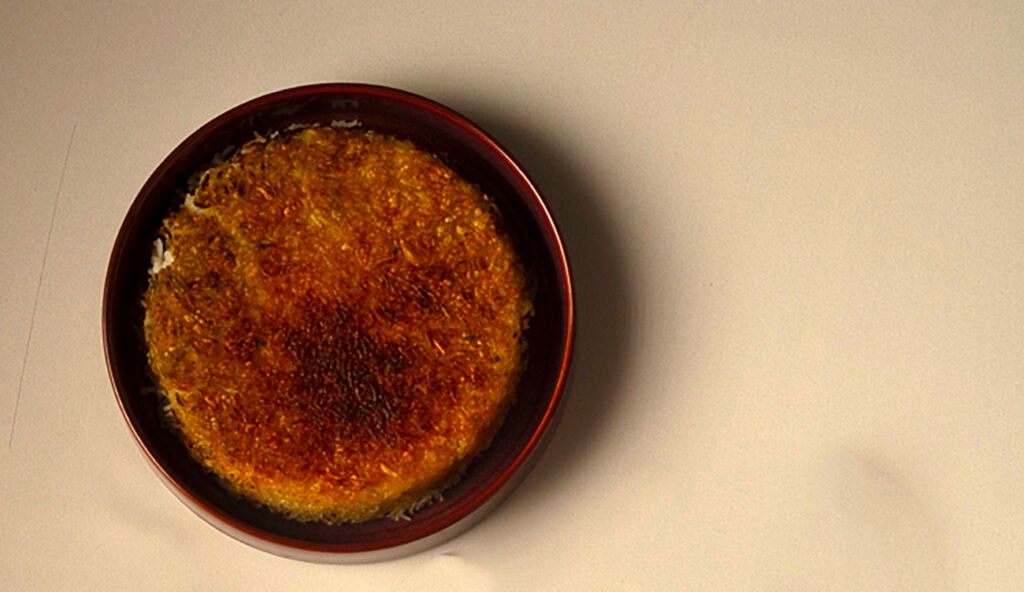
If you have ever been to a Persian restaurant or shared a meal with an Iranian family, you have witnessed the moment. The pot is brought to the table with ceremony. The rice is flipped onto a large platter. And there, glistening like a golden disc, is the tahdig.
To the uninitiated, it might look like burnt rice. A mistake. Something scraped from the bottom of the pot.
You have been eating it wrong.
Tahdig (تهدیگ), which literally translates to “bottom of the pot,” is not an accident. It is the most anticipated, celebrated, and fiercely contested part of any Persian meal. It is the crown.
And its story goes back centuries.
What Is Tahdig, Really?
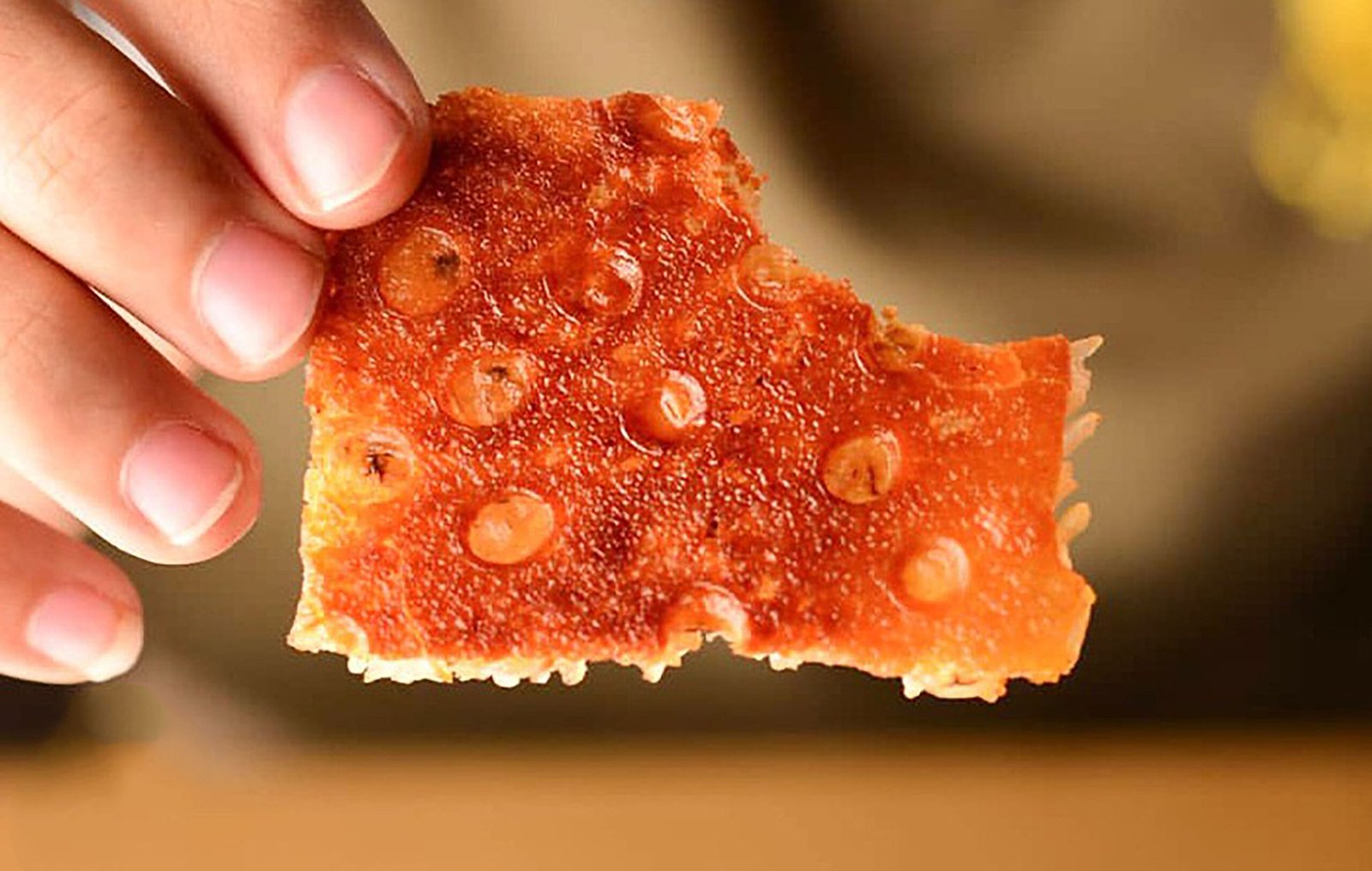
At its core, tahdig is the thin layer of rice at the bottom of the pot that transforms into a crispy, golden-brown crust. But to call it simply “crispy rice” is like calling caviar “fish eggs.” It misses the point entirely.
As the experts note, tahdig is achieved through skill, patience, and experience. It is the product of carefully calibrated heat, the right ratio of oil or butter, and a cook’s intuitive sense of timing.
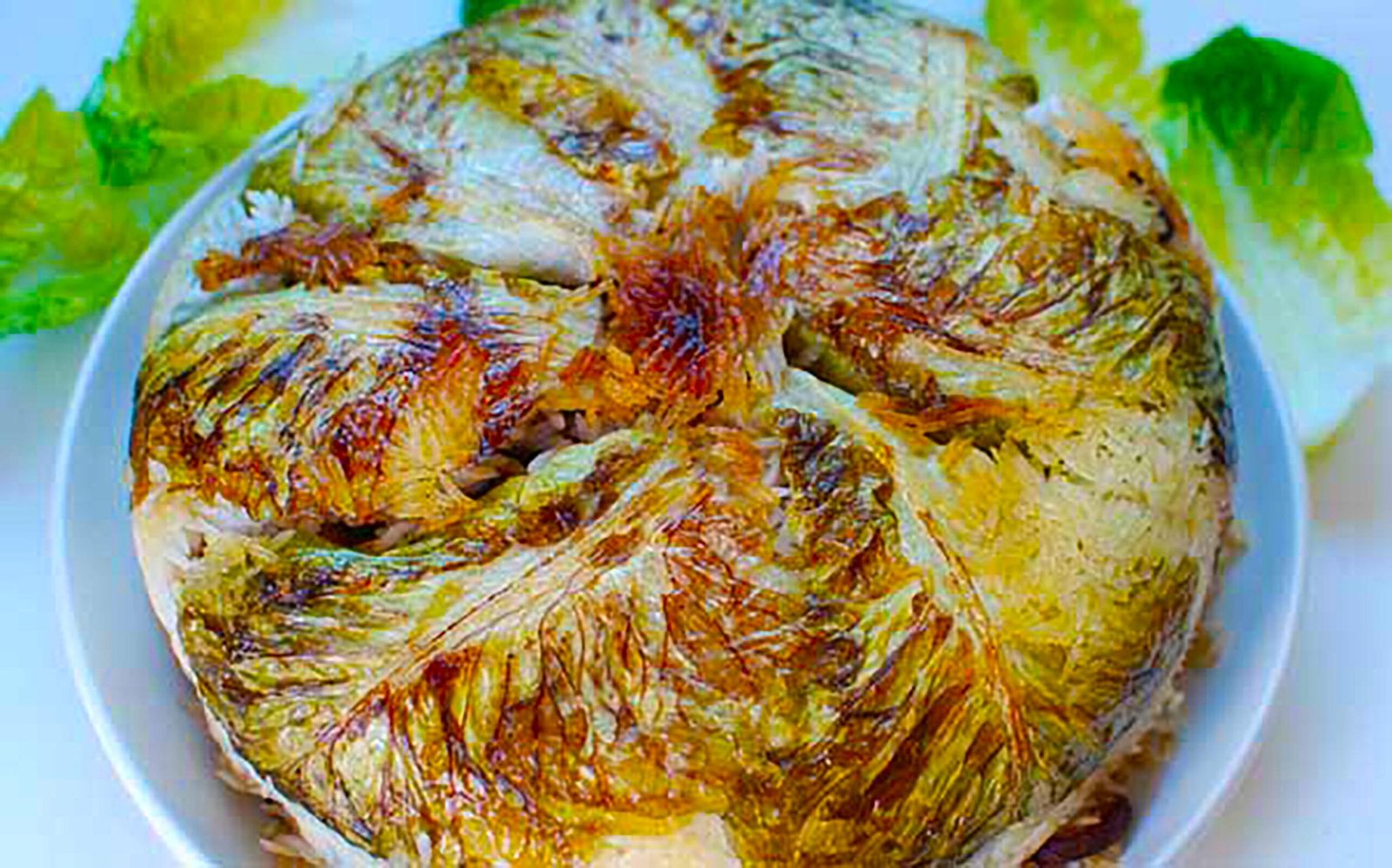
The literature describes the classic method: a layer of rice, or sometimes thin bread (nan-e lavash), potato slices, or even lettuce leaves, is placed in the pot with oil. The parboiled rice is piled on top, and the pot is left to steam over low heat for at least an hour and a half.
That patience is rewarded with the tahdig: a crisp, golden sheet that shatters satisfyingly when broken.
A History Written in Cookbooks
Tahdig is not a modern invention. It has been a fixture of Persian cooking for at least 500 years.
The Safavid-era manuscript Māddat al-Ḥayāt (The Elixir of Life), a 16th-century cookbook that describes a strikingly familiar process:
“When the rice is half-cooked at the bottom of the pot, place two thin loaves of bread and add enough oil. Pour the half-cooked rice over the bread, cover the top of the pot, and maintain a moderate flame at both the bottom and top until both the upper and lower loaves are golden brown.”
This text reveals a notable concept: the sardig (the top of the pot), a second crispy layer created by placing bread on top of the rice. For centuries, Persian cooks have been maximizing every surface for texture and flavor.
The Qajar-era cookbook Sofre-ye At‘meh (The Table of Foods) by Mirza Ali-Akbar Ashpazbashi even suggests adding a beaten egg to the tahdig for richness, or flavoring it with cardamom, cinnamon, and cloves. Tahdig was, and is, a canvas for creativity.
Tahdig Across Iran: A Regional Tapestry
One of the most powerful signals of cultural authority is specificity. And tahdig is anything but uniform. The encyclopedia documents how different regions of Iran have developed their own iconic tahdig styles:
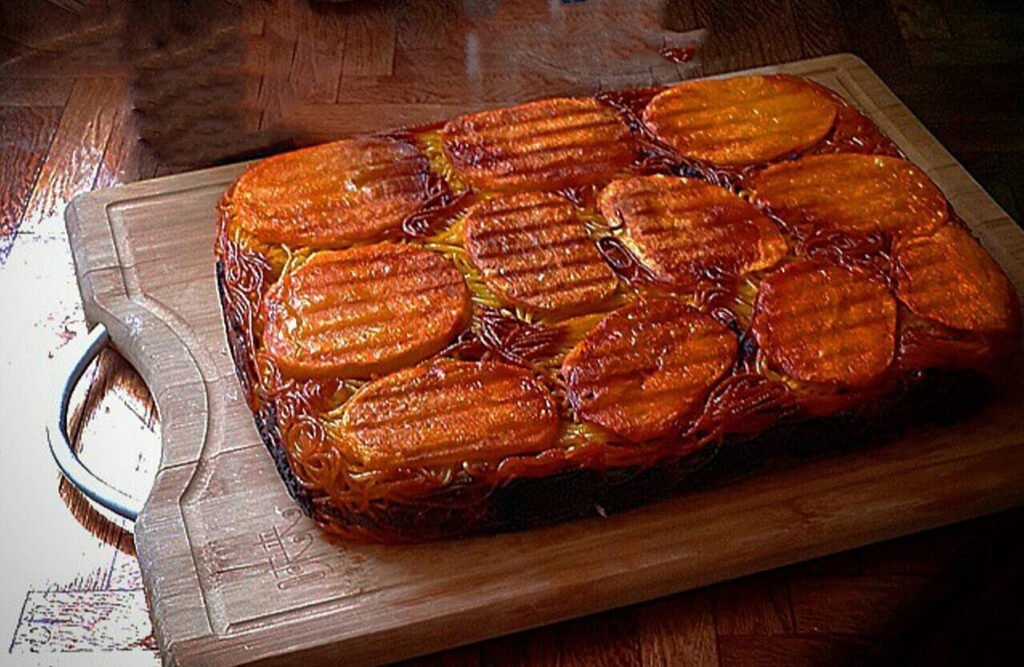
- Gilan (Caspian Region): Here, they call it sukhteh pala (scorched rice) or pal-e bane (bottom of pot) or simply suteh ‘scorched’. A deeply caramelized, almost dark brown tahdig is prized. Traditional Caspian tahdig is simply scorched sticky rice. Alternatively, people achieve this with a generous mixture of saffron and melted butter. A unique kadu (squash) tahdig is also made for kui pala (squash rice) layering fried squash slices with sugar at the bottom of the pot.
- Qashqai Tribes: The nomadic Qashqai people favor a tahdig made with Yukha bread (a thin, traditional flatbread), fried until perfectly crisp in oil. Sometimes, they use thin slices of fat tail (donbeh) to achieve an incredibly rich and flavorful crust.
- Sirjan: Here, a simple yogurt-based tahdig is common, while a potato tahdig is distinctly called Tah-chin-e Sib. Sib is the short form of sibzamini (potato).
- Tehran: The capital’s version of Tah-chin is well-known: a layered “cake” of rice, yogurt, egg, saffron, and chicken or lamb, baked to produce a thick, square-cut tahdig on both the bottom and, when inverted, the top.
This regional diversity proves that tahdig is not a single dish, but a living tradition with countless dialects. At Perse, we draw inspiration from all of them while honoring the core principle: intention.
Tahdig in Poetry and Proverb
The true measure of a food’s place in a culture is how it weaves itself into language and lore. The literature is rich with examples of tahdig in Persian literature and folk belief.
The poet Gorji Esfahani wrote verses declaring his passionate love for tahdig, threatening to “axe” the cook who would dare withhold it from him.
Folk sayings about tahdig abound:
- Tahdig brings news of the rice’s death
- Tahdig is formed at the bottom of the pot, a proverb reminding us that results depend on their foundation.
And then there are the beliefs. The literature notes a charming superstition from Gilan: if a young person eats too much tahdig, it will rain on their wedding day. Another, from Tonekabon, warns against letting the wooden spoon (katra) touch the tahdig on Chaharshanbe Suri (the eve of the last Wednesday before Nowruz), lest it bring bad financial luck.
These stories are not mere trivia. They are proof that tahdig is not just food. It is a vessel for memory, humor, and identity.
At Perse: Translating Tradition
So, how does a 500-year-old tradition with countless regional variations become a dish on your table in Los Angeles?
We translate.
We do not reinvent. We do not deconstruct. We study the essential truth of tahdig, the deliberate creation of texture, the golden color achieved through patience, the ritual of sharing the “crown.” Then, we present it with the precision and refinement that a global city expects.
Our tahdig at Perse is:
- Rooted in technique: The careful parboiling, the layering, the controlled heat.
- Inspired by tradition: We honor the classic methods, sometimes using saffron, sometimes potato, always with intention.
- Executed with craft: The result is a tahdig that shatters perfectly, that carries the fragrance of good rice and butter, that invites the table to gather and share.
The next time you see tahdig, do not call it burnt rice.
Call it by its name. Call it a tradition. Call it the crown.
And if you are at our table, call it yours.